WhatsApp Milk Bill Format — Free Template & How to Send
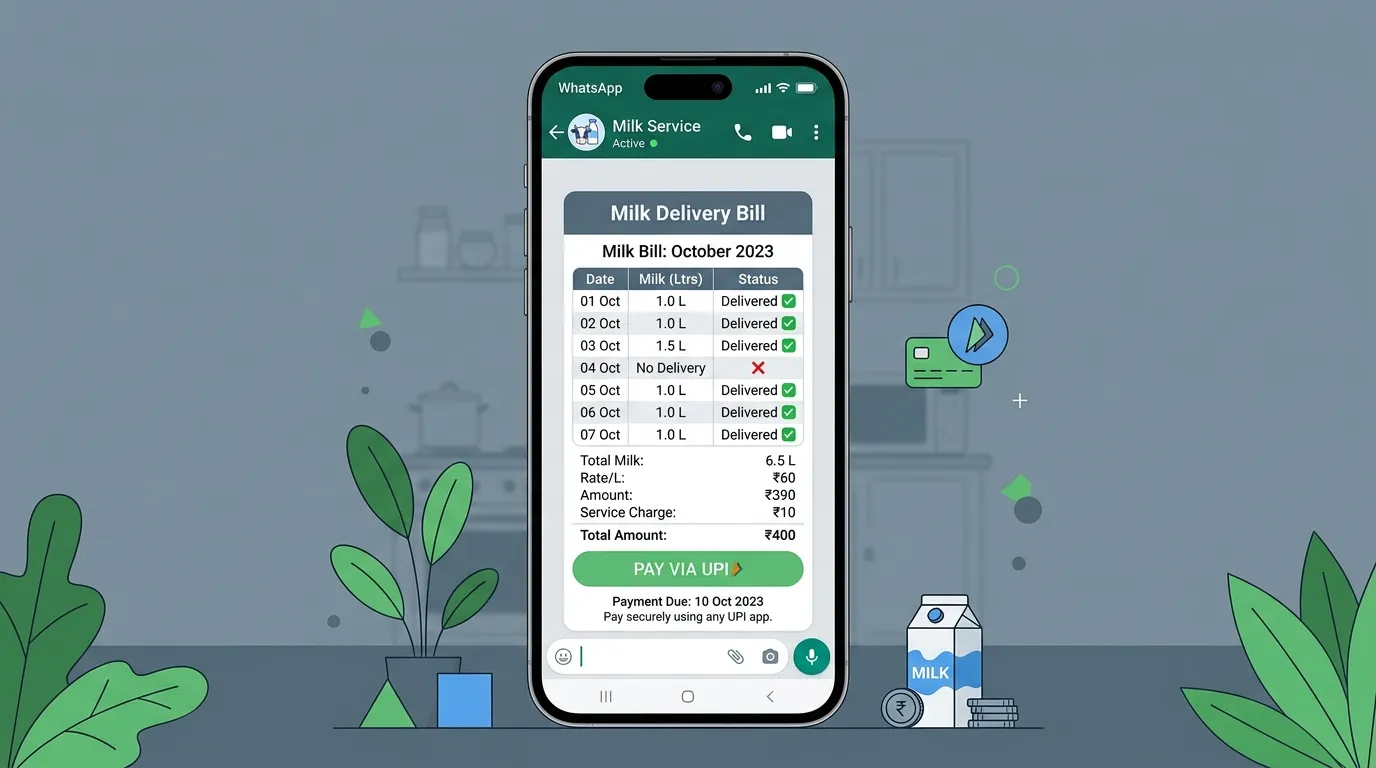
Table of Contents
Why WhatsApp Billing is the Future of Dairy
In India, over 500 million people use WhatsApp daily, making it the default communication channel for virtually every household. For milkmen and dairy distributors, this presents a powerful opportunity: instead of printing paper receipts or verbally informing customers about their dues, you can send professional, itemized bills directly to their WhatsApp — and they will actually read them.
WhatsApp billing solves three critical problems that plague traditional dairy billing: customers claiming they never received the bill, disputes over individual daily entries, and the sheer time wasted in physically distributing paper bills to 100+ households. Let us walk through the ideal bill format and how to implement it.
The Ideal Milk Bill Format
A professional milk bill via WhatsApp should include the following elements in a clear, readable format:
Header Section: Your dairy business name, billing period (e.g., "June 1-30, 2026"), and the customer's name. This immediately tells the customer what the message is about.
Daily Delivery Breakdown: A date-wise list showing each day's delivery with the quantity and rate. For example: "June 1 — Cow Milk 1L × ₹65 = ₹65". Days when no delivery was made (holidays, pauses) should also be shown as "No delivery" or "Holiday" so the customer can verify that those days were not charged.
Summary Section: Total delivery days, total quantity delivered, gross amount, any taxes (if applicable), advance payment adjustments, and the final net amount due.
Payment Instructions: Your UPI ID, bank account details, or a note that cash collection will happen on a specific date.
Free Template You Can Use Today
Here is a ready-to-use text format you can copy and customize for your dairy business. Simply replace the bracketed information with your actual data:
🥛 [Your Dairy Name]
📅 Bill Period: [Month Year]
👤 Customer: [Customer Name]
📋 Daily Deliveries:
01/06 — Cow Milk 1L × ₹65 = ₹65
02/06 — Cow Milk 1L × ₹65 = ₹65
03/06 — Holiday (No delivery)
...
📊 Summary:
Total Days: [X] | Total Qty: [X]L
Gross Amount: ₹[XXX]
Advance Paid: -₹[XXX]
Net Due: ₹[XXX]
💳 Pay via UPI: [your-upi@bank]
📞 Questions? Call [Your Number]
How to Automate WhatsApp Bill Generation
Manually creating this bill format for each of your 100+ customers every month would take hours. This is where dairy billing software becomes essential. A good dairy management app tracks your daily entries throughout the month, then at billing time, generates a properly formatted invoice for each customer with a single tap.
The app compiles every delivery entry, applies the correct customer-specific rates, deducts holidays and pauses, adjusts for advance payments, and formats everything into a clean message that you can share directly to the customer's WhatsApp. What would take you an entire day of manual calculations can be completed in minutes.
Best Practices for WhatsApp Billing
Send bills on a consistent date: Choose a fixed billing date (e.g., the 1st of every month) and stick to it. Customers appreciate predictability and are more likely to pay promptly when they expect the bill.
Include a greeting: A brief personal touch — "Namaste [Name], here is your milk bill for June" — makes the bill feel less transactional and more professional.
Follow up on unpaid bills: If a customer has not paid within 5-7 days, send a polite reminder. Most dairy apps can generate payment reminder messages automatically.
Keep records of sent bills: Always maintain a record of when each bill was sent and whether it was delivered and read (WhatsApp blue ticks). This protects you in case of disputes.
Common Mistakes to Avoid
Do not send bills as screenshots of messy handwritten calculations — this looks unprofessional and is hard to read on a small phone screen. Do not send bills late in the month when customers have already mentally allocated their money elsewhere. And do not argue over WhatsApp if a customer disputes a charge — call them or visit in person to resolve it amicably.
WhatsApp billing is not just about convenience; it is about building trust through transparency. When your customers can see every single delivery itemized with dates and rates, they know they are being charged fairly. That trust is what keeps them loyal to your dairy service month after month.
Regional Language Billing
Many milkmen serve customers who are more comfortable reading in Hindi, Punjabi, Marathi, or Tamil rather than English. The best dairy management apps support generating bills in regional languages, which significantly improves customer understanding and reduces follow-up questions. When a customer can read their bill in their own language, they feel respected and are more likely to pay promptly.
Whether you use a pre-built template or an automated billing app, ensure the format is clean, the numbers are clearly visible, and the overall layout looks professional. Your WhatsApp bill is often the only "document" your customer receives from your business each month — make it represent the quality of your service.
The shift to WhatsApp billing is not just a convenience upgrade; it is a strategic business move that improves cash flow, reduces disputes, and positions your dairy service as modern and trustworthy in a competitive market.
Written by
Umesh
Part of the Milkman team building free technology to empower India's local dairy businesses. We write about dairy management, delivery optimization, and practical business tips for milkmen and dairy distributors.
Ready to transform your dairy business?
Stop managing your milk delivery routes on paper. Join hundreds of milkmen using our free software to automate billing, track inventory, and optimize deliveries.
Create Your Free Account